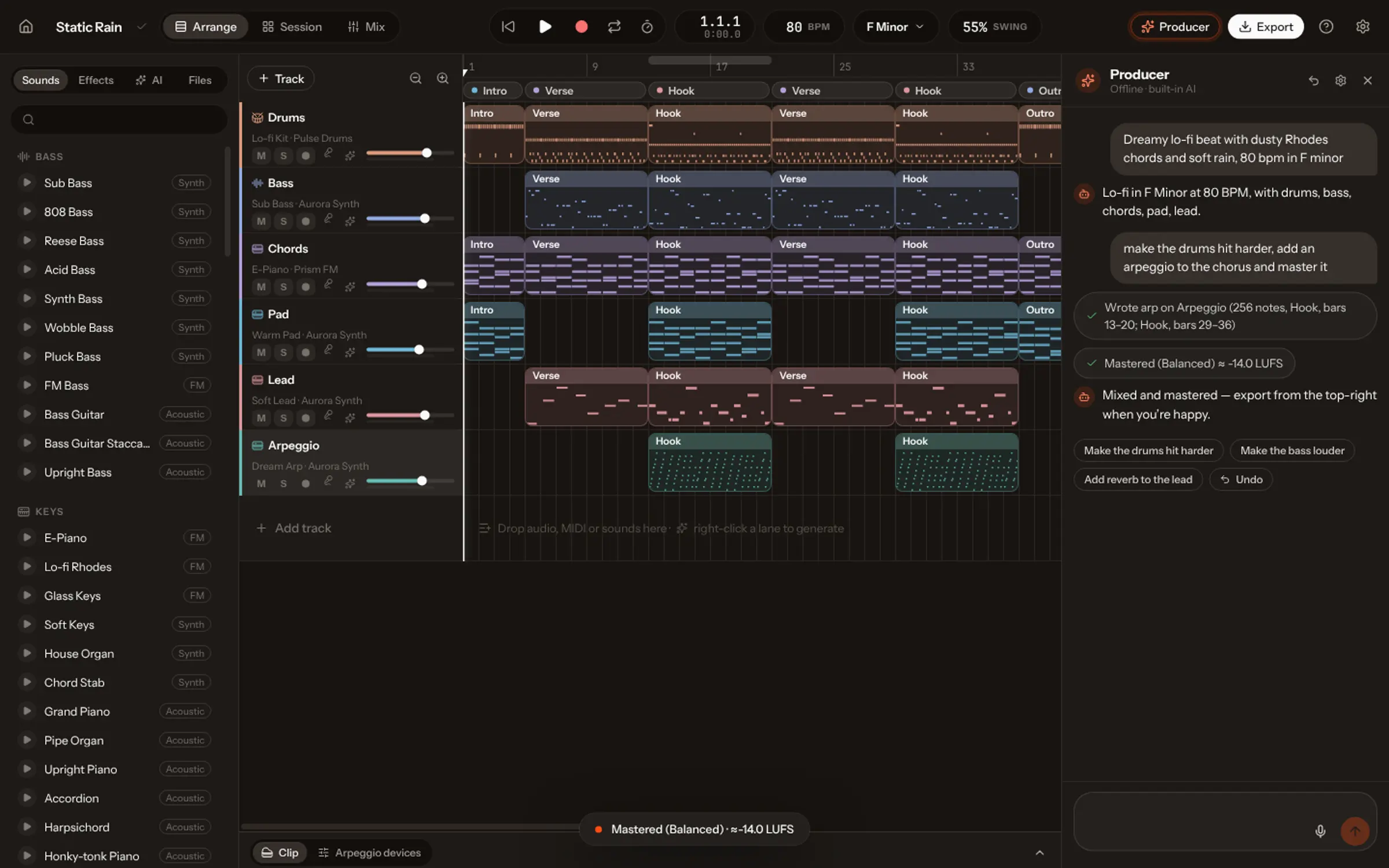
A good music prompt is short but names six things: a specific genre, one or two mood words, two or three instruments, optionally a tempo and key, the song’s shape, and who sings what about. For example: “Dreamy indie pop with warm Rhodes and soft strings, 100 BPM in A minor, a quiet intro that builds to a big chorus, breathy female vocal about driving home at dawn.”
Most disappointing AI songs come from one of two prompts: too vague (“a cool song”) or too crowded (fourteen instruments, three genres and a paragraph of feelings). Producers don’t describe music either way. They think in layers, and give a word or two for each.
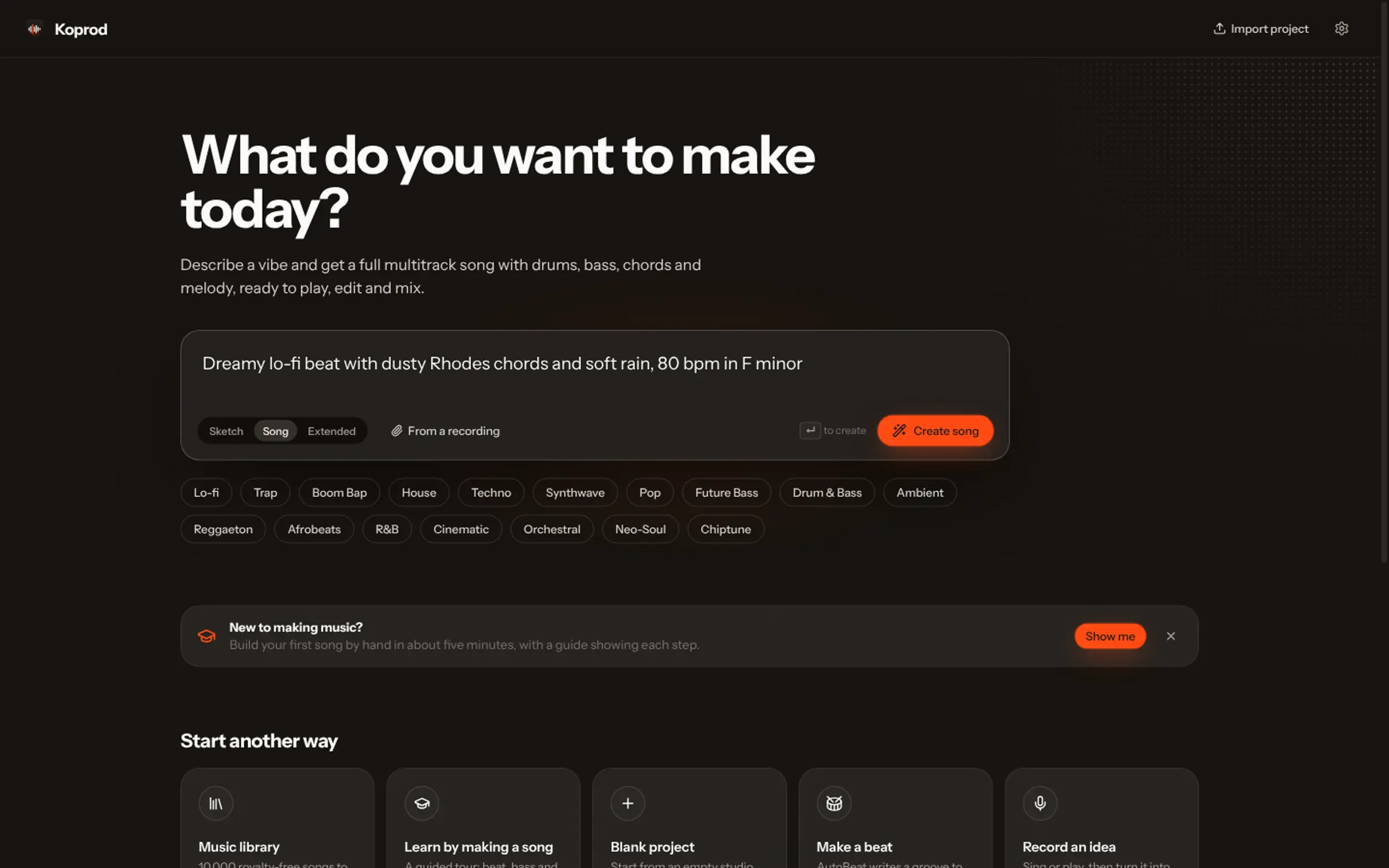
Here are the six layers that make a prompt work, the mistakes to avoid, and twelve examples you can paste into Vocals’ Create box as they are.
The six layers of a music prompt
| Layer | What it decides | Example words |
|---|---|---|
| 1. Genre | Drums, instruments, tempo, almost everything | deep house, boom-bap, indie folk |
| 2. Mood | Chords and sounds | dreamy, late-night, uplifting |
| 3. Instruments | What you hear first | warm Rhodes, punchy 808s, soft strings |
| 4. Tempo and key | The groove (optional) | 100 BPM in A minor |
| 5. Shape | How it unfolds | a quiet intro that builds, a big chorus |
| 6. Voice and story | Who sings, and the words | breathy female vocal about driving home at dawn |
1. Start with a specific genre
The genre carries more information than any other word. “Electronic” could be anything from ambient to drum and bass; “deep house” sets the tempo, the kick pattern, the bass and the sounds at once. Pick the most precise name you know. Two genres can blend (“lo-fi jazz”), three rarely do.
2. Add one or two mood words
Mood decides the chords (major or minor, simple or rich) and the sounds (bright or warm, sharp or soft). One or two words are plenty: dreamy, melancholic, triumphant. A place or a moment works too: “for a late drive”, “at a sunrise wedding”.
3. Name two or three instruments
Choose the sounds you want to hear first and add one adjective: warm Rhodes, punchy 808s, fingerpicked guitar. More than three and they compete for the front of the mix. Leave the rest to the genre.
4. Tempo and key, only when they matter
A BPM number or a key pins the groove down, useful when the song must fit a video edit or another track. Otherwise leave them out: the AI picks what suits the genre, usually better than a guess.
5. Ask for a shape
Songs are journeys. Say how this one moves: “a quiet intro that builds”, “a drop after the second chorus”, “a fade-out ending”, “short, under a minute”. For background music, “steady, no big changes” is a shape too.
6. Give it a voice and a story
Say who sings (breathy female vocal, raspy male vocal, a choir) and what the song is about. The story is what the lyrics are written from, so a concrete one (“about the last train home after a party”) gives better words than an abstract one (“about love”). For music only, write instrumental.
Ask for a style, not a person. In Vocals, requests for a real artist’s voice or a copy of their song are refused. Describe what you like about them instead: the drums, the voice, the era.
Twelve prompt examples
- Lo-fi: “Lo-fi hip hop with dusty drums, warm Rhodes and vinyl crackle, 80 BPM, instrumental, for studying late at night.”
- Pop: “Bright synth pop with punchy drums and a big sing-along chorus, female vocal about dancing alone in the kitchen.”
- Acoustic: “Warm acoustic folk with fingerpicked guitar and soft harmonies, about leaving home for the first time.”
- House: “Deep house with a rolling bassline, airy pads and a chopped vocal hook, 122 BPM, builds slowly.”
- Hip hop: “90s boom-bap with dusty drums and a jazzy piano sample feel, laid-back male rap about the city at dawn.”
- R&B: “Smooth late-night R&B with lush keys and a deep sub bass, breathy vocal about a missed call.”
- Rock: “Driving indie rock with distorted guitars and live drums, a quiet verse and an explosive chorus.”
- Cinematic: “Epic cinematic orchestral piece with soft strings that build to brass and timpani, instrumental, for a trailer.”
- Afrobeats: “Sunny afrobeats with log drums, bright guitar licks and a catchy chorus about a summer road trip.”
- Ambient: “Peaceful ambient piece with slow pads, a distant piano and no drums, 60 BPM, for meditation.”
- Country: “Upbeat country pop with banjo and hand claps, warm male vocal about a small-town Friday night.”
- Jazz: “Cozy jazz trio, brushed drums, upright bass and piano, instrumental, for a rainy café afternoon.”
Five mistakes that make songs worse
- Stacking genres. “Jazz metal trap reggae” averages into nothing.
- Listing every instrument. Three is the sweet spot.
- Contradicting yourself. “Calm and aggressive”, “slow 160 BPM”.
- Writing a paragraph of feelings. Two mood words beat ten.
- Naming an artist. Refused in Vocals, and vaguer than describing the style anyway.
Iterate like a producer
Treat the first take as a draft. Press Create again for another performance of the same idea, or change a single word to hear what it does. When a song is close, don’t regenerate it: open it in the studio and change the part that’s wrong. The Academy lesson on writing descriptions has a builder to practise the six layers.