Voice to instrument
Sing a melody. Hear it on any instrument.
Hum the tune in your head over your song. Vocals turns it into notes and plays them on a violin, a sax, a piano or a synth, in time and in key.
Try it nowThree steps. No instrument needed.
It’s in the studio: every track has a Sing button.
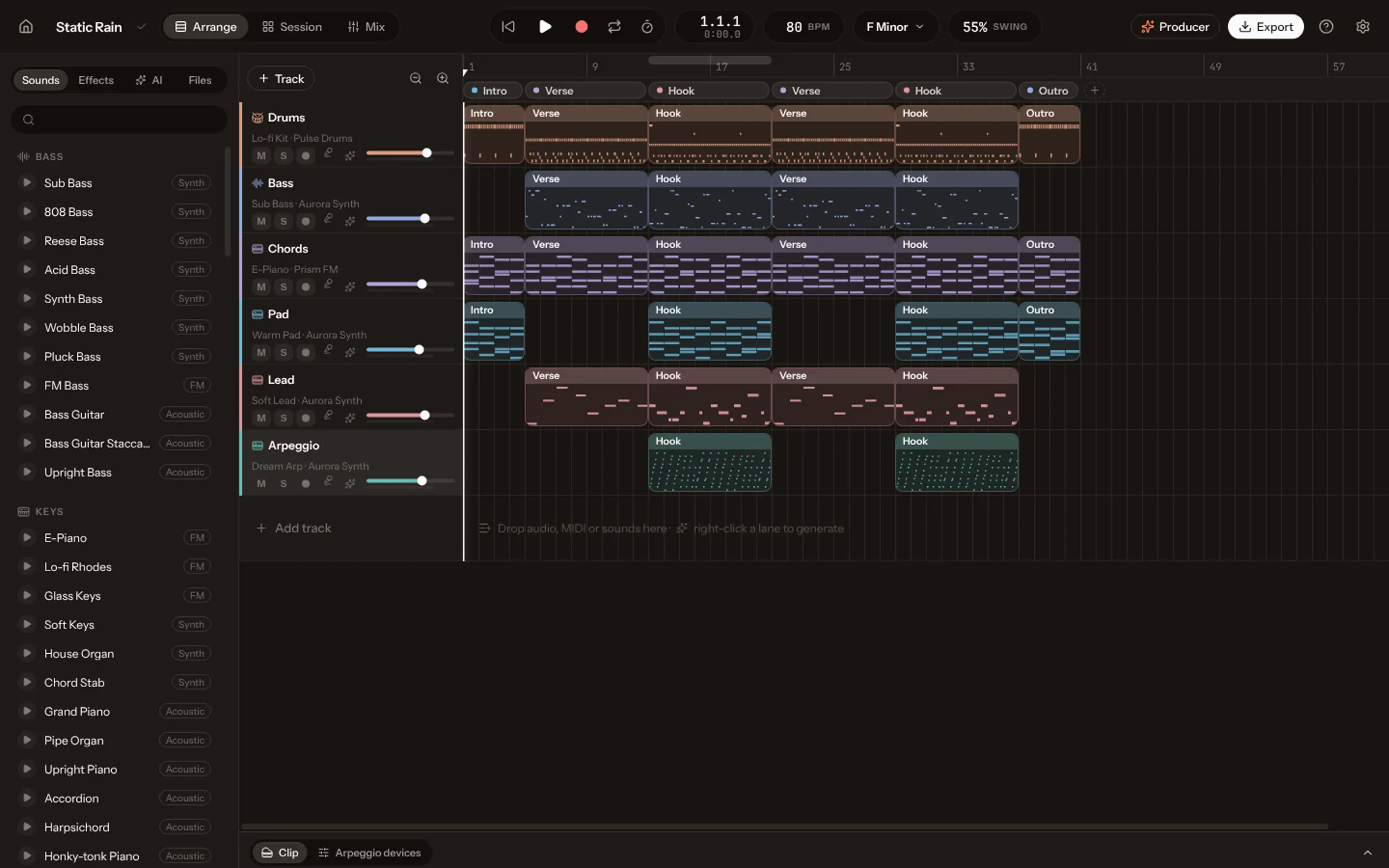
Sing over your song
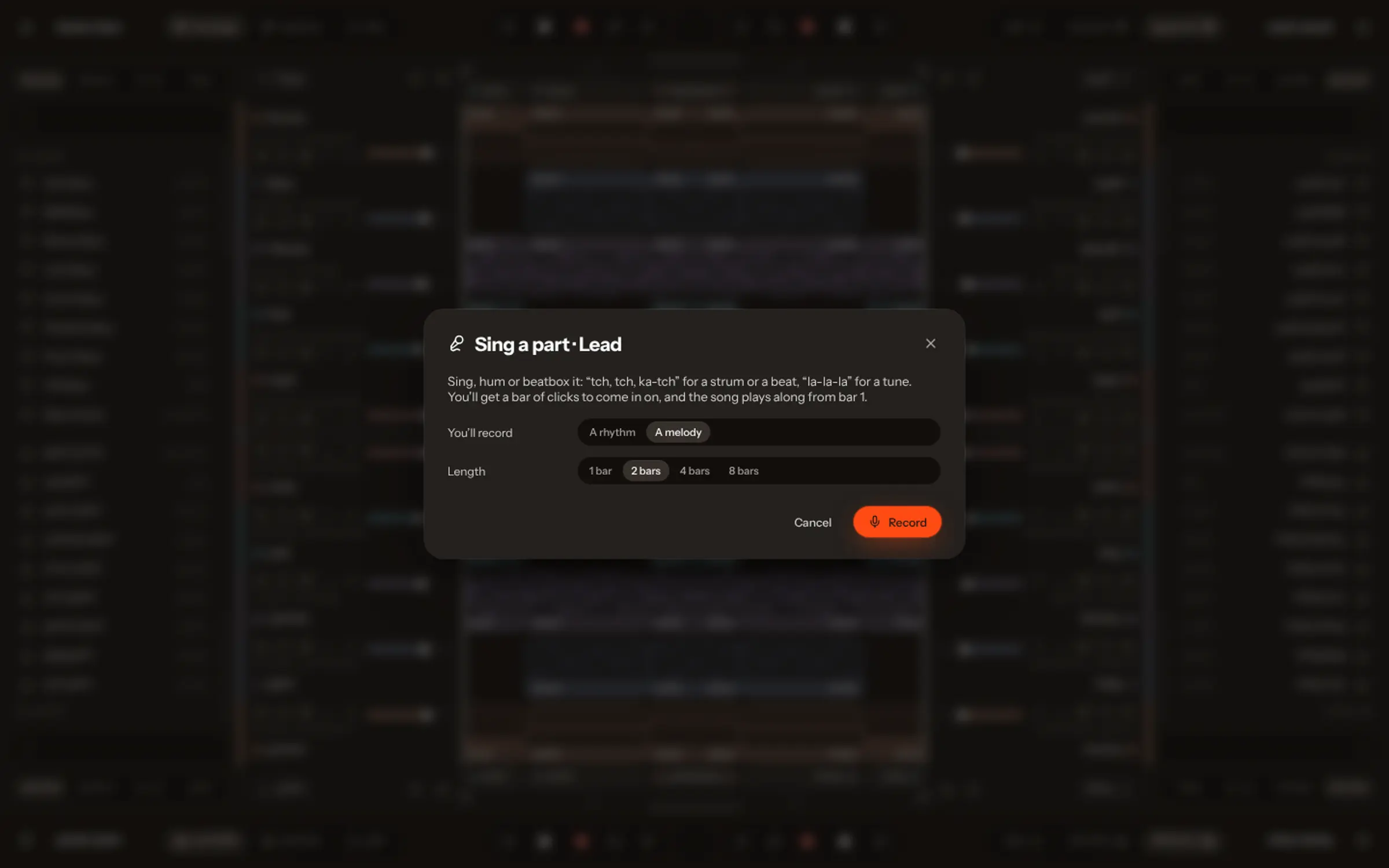
Press Sing on a track. After a bar of clicks, sing, hum or beatbox along, for 1 to 8 bars.
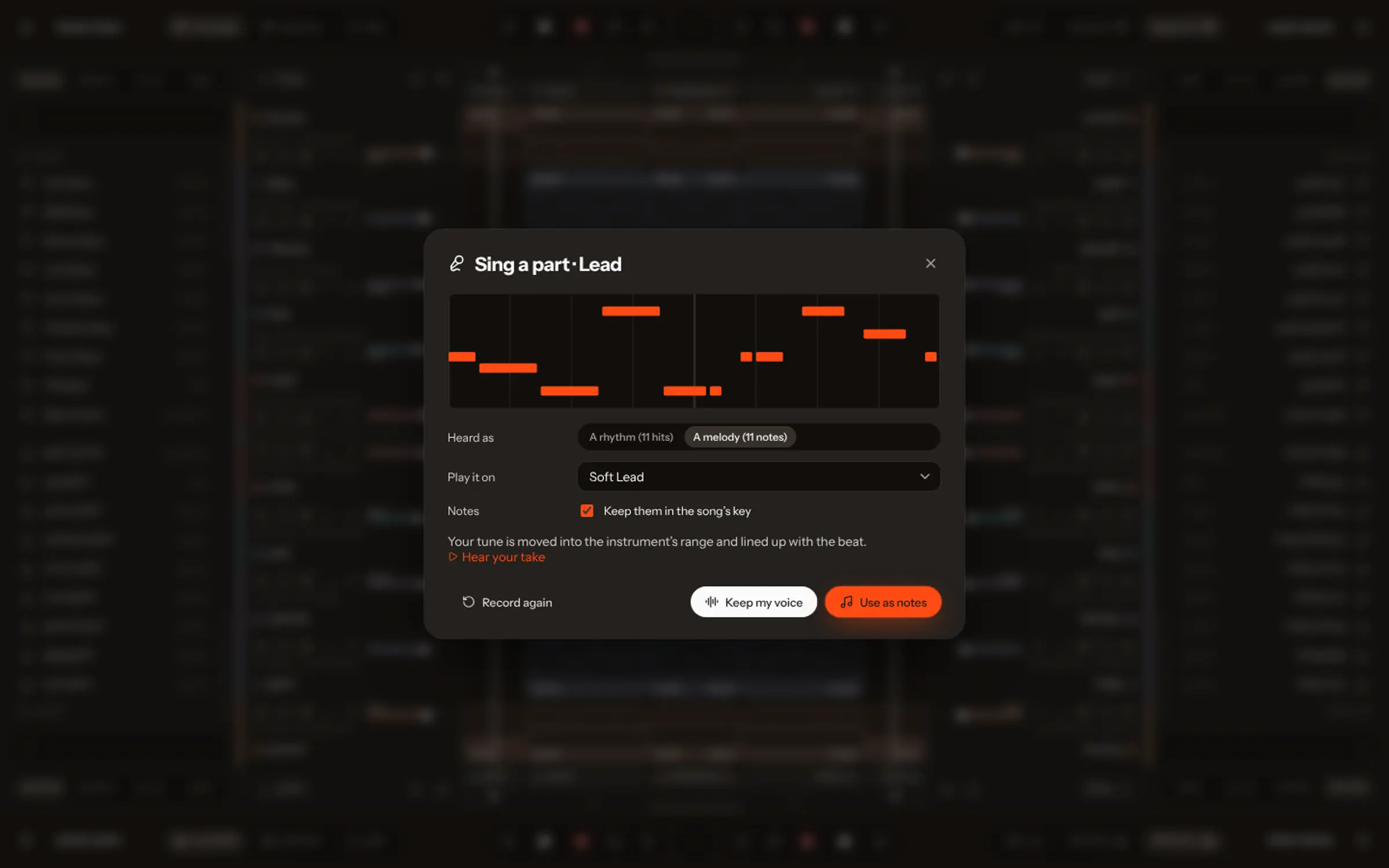
Pick the instrument
Your take comes back as notes. Hear them on any instrument, and switch until it fits.
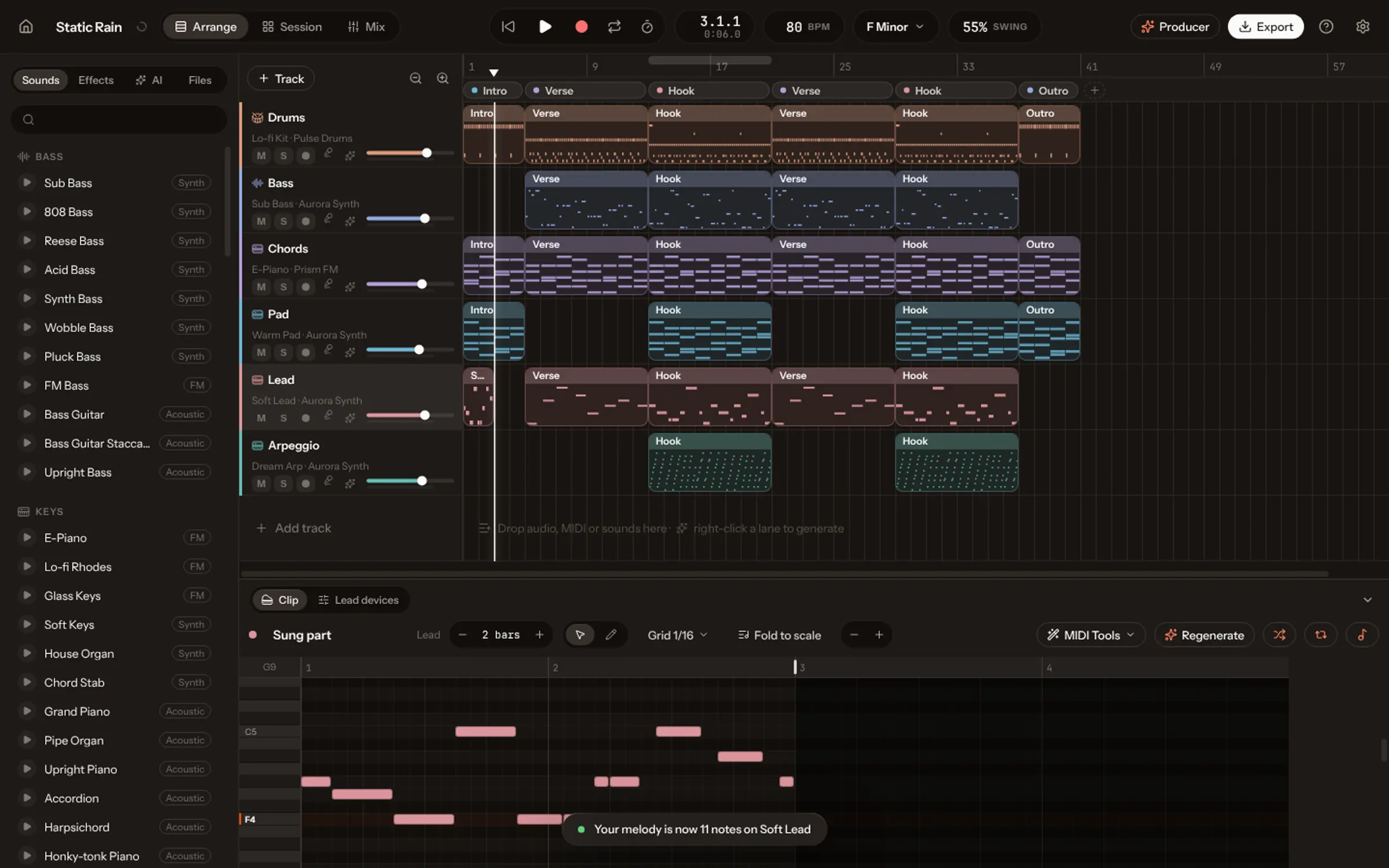
Make it a part
The notes land in your song, every one yours to move. Or keep your voice as audio.
One note for every note you sing.
Vocals hears each syllable and follows your pitch. Sing “la la la” and you get one note per “la”: the scoop into a note, the slide between two and the vibrato on a long one stay inside their note.
- In time: lined up with the beat of your song.
- In key: moved into the song’s key, or left as you sang it.
- In range: moved into the instrument’s register, so a low hum can play a flute.
Beatbox a beat. Or strum the chords.
Sing a rhythm, “boom, tch, ka-tch”, and a drum kit plays it: low sounds become kicks, “ka” snares, “tch” hats. On any other instrument your rhythm strums the song’s chords, and on a bass it plays their roots.
- On the 16th grid, with your accents: louder hits play louder.
- A melody or a rhythm: choose before you sing, or switch after.
72 recorded instruments to sing through.
Your take plays on any of them, and on every synth and drum kit in the studio.
- Grand PianoF0–E8
- Pipe OrganG#1–E7
- Drawbar OrganG#1–E7
- Jazz OrganG#1–E7
- Rock OrganG#1–E7
- Upright PianoG#0–E8
- AccordionG2–B5
- HarpsichordA#0–E6
- Honky-tonk PianoE0–D#8
- Soft PianoF0–E8
- WurlitzerF1–C7
- Electric GrandB0–D#8
- Clean Electric GuitarG#1–F6
- Jazz GuitarG#1–F6
- Distortion GuitarG#1–F6 · Normal, Palm Mute
- BanjoB1–D#5
- Nylon GuitarD#1–E6
- UkuleleG#3–E6
- Bass GuitarA0–G4 · Sustain, Staccato
- Upright BassG#0–C#4
- TR-808 BassC1–G3
- Voice AahA#1–D4
- Studio Drum Kit16 pads
- Brushes Kit12 pads
- Arena Drum Kit17 pads
- Rock Drum Kit14 pads
- TR-808 Kit19 pads
- Violin SectionD#3–F#6 · Sustain, Staccato, Pizzicato, Tremolo
- Solo ViolinD#3–E7 · Sustain, Staccato, Pizzicato
- Viola SectionG#2–F#6 · Sustain, Staccato, Pizzicato, Tremolo
- Cello SectionG#1–A5 · Sustain, Staccato, Pizzicato, Tremolo
- Double BassC1–D#4 · Sustain, Staccato, Pizzicato, Tremolo
- HarpC1–A7
- Folk HarpG#1–C7
- Dan TranhG2–D#6 · Normal, Tremolo
- Solo CelloG#1–E6 · Sustain, Pizzicato
- ErhuA#3–C#6 · Sustain, Staccato
- String EnsembleC1–F#6 · Sustain, Staccato, Pizzicato, Tremolo
- TrumpetC#3–E6 · Sustain, Staccato
- French HornF1–A5 · Sustain, Staccato
- TromboneF#1–A4 · Sustain, Staccato
- TubaC#1–F#4 · Sustain, Staccato
- Brass SectionC#1–E6 · Sustain, Staccato
- FluteG#3–E7 · Sustain, Staccato
- PiccoloD#5–B7
- OboeF#3–A6 · Sustain, Staccato
- ClarinetA#2–A6 · Sustain, Staccato
- BassoonF#1–G5 · Sustain, Staccato
- Tenor SaxE2–G#6 · Sustain, Vibrato, Staccato
- HarmonicaG#2–E7 · Sustain, Vibrato
- Alto RecorderC#4–G#6 · Sustain, Staccato
- OcarinaF4–F6 · Sustain, Vibrato
- BagpipeC#4–B5
- Alto SaxA2–C6
- Baritone SaxA1–C5 · Sustain, Staccato
- Woodwind EnsembleF#1–E7 · Sustain, Staccato
- Sax SectionA1–G#6 · Sustain, Staccato
- GlockenspielD#5–E8
- XylophoneD#4–E8
- Concert MarimbaC#2–E7
- TimpaniD2–A3 · Hit, Roll
- Tubular BellsG#3–A5
- Acoustic KalimbaC#3–F5
- Hang DrumF3–F#5
- VibraphoneC#3–G#6 · Soft Mallets, Hard Mallets
- BalafonA3–A6
- MbiraF#2–F6
- Hand ChimesG#3–E7
- Steel DrumsG#3–D#6
- Orchestral Percussion24 pads
- Latin Percussion15 pads
- World Percussion17 pads
What can I sing?
A tune on “la”, “da” or any syllable, or hummed with your mouth closed. Or a rhythm: “boom, tch, ka-tch” plays the drums, or strums the chords on other instruments.
Do I need to sing well?
No. Vocals lines your notes up with the beat and moves them into the song’s key, so a rough hum is enough. You can move any note afterwards in the piano roll.
Will it sound like my voice?
No: your voice gives the notes, the instrument gives the sound. A tune sung on a violin sounds like a violin. To keep your voice itself, choose Keep my voice and it goes into the song as audio.
How does it count the notes?
One per syllable, and one more where your voice moves to a new pitch and stays there. Vibrato, a scoop up to a note or a slide between two stay inside their note. A take that’s mostly sung opens as a melody; you can switch it to a rhythm.
Which instruments can it play?
Any instrument in Vocals: 72 recorded instruments, from grand piano and violin to erhu and ocarina, plus the synths and the drum kits.
Do I need headphones?
They help. The song plays while you sing, and without headphones the mic can hear it from your speakers too.
Can I hum to the Producer instead?
Yes. Press the mic in the Producer’s chat and say what you want, “add a guitar that sounds like this”, then hum it. Vocals finds the tempo you hummed at, fits it to the song and writes the part.
Can I release what I make?
Yes. What you make is yours, with no royalties to Vocals; a few instruments ask for a credit (see Credits).