Royalty-free means you pay once, or nothing, and owe no royalties each time the music is played; it doesn’t mean the music has no copyright. Before using a track on YouTube, check that its licence covers commercial use, whether it needs a credit, and keep a copy of the licence. Vocals’ library has 5,000 AI-made songs you can use commercially with no royalties and no credit.
Every creator hits the same wall: the video is done, it needs music, and the song you love belongs to someone else. Using it anyway can get the video muted, its revenue claimed, or taken down. “Royalty-free music” is the usual answer, and also one of the most misunderstood phrases on the internet.
What royalty-free actually means
A royalty is a payment each time music is used: per play, per copy, per broadcast. Royalty-free means the licence lets you use the music without those ongoing payments. You might pay once, pay a subscription, or pay nothing; either way, a million views cost the same as ten.
It does not mean the music has no owner. Someone still holds the copyright, and the licence they give you sets the rules.
Licence terms, side by side
| Term | What it means | What to check |
|---|---|---|
| Royalty-free | No per-use payments | What the licence still restricts |
| Copyright-free / public domain | No owner at all | That the recording, not only the composition, is in the public domain |
| Creative Commons BY | Free, with a credit | The exact credit line required |
| Creative Commons NC | Free, non-commercial only | Monetized videos are usually commercial |
| Commercial use | You may earn money with it | Ads, sponsorships and client work included? |
Five things to check before you use a track
- Commercial use. A monetized channel, a sponsored video or client work is commercial. “Personal use only” isn’t enough.
- Credit. Does the licence require one, and in what form?
- Where you can use it. YouTube, podcasts, games, apps, ads, broadcast: some licences list them.
- For how long. Does the licence survive if your subscription ends, for videos already published?
- Proof. Keep the licence or a receipt with the date and the track’s name, in case you are asked.
Unsure about a track’s rights? Don’t use it. A video re-edited before publishing costs minutes; one claimed after a million views costs its revenue.
Where AI-made music fits
AI music generators are a new source of royalty-free tracks, but their terms vary a lot: some free plans are non-commercial, or keep ownership of what you generate. Read the terms of the plan you are on. Our comparison with Suno cites what each plan allows.
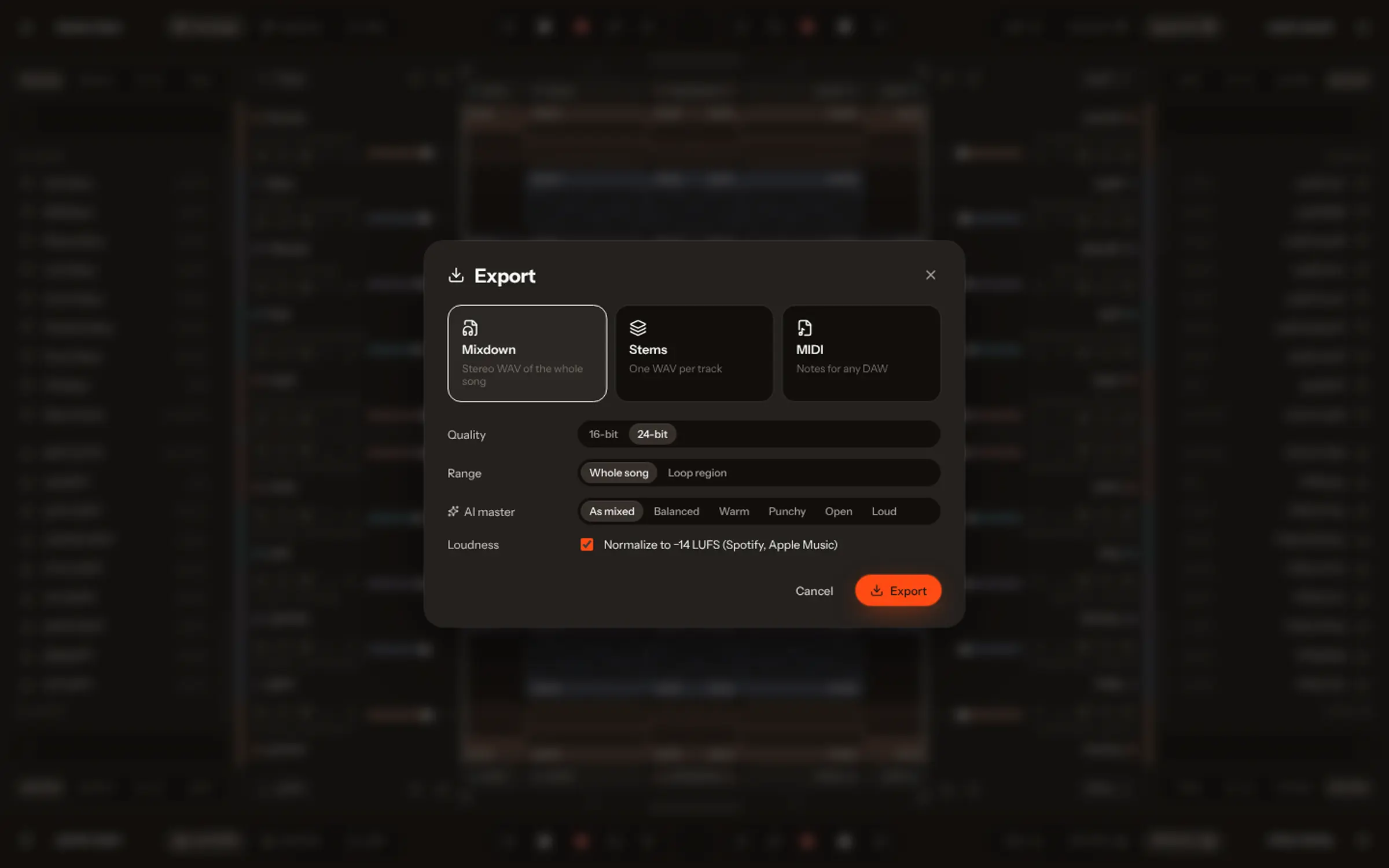
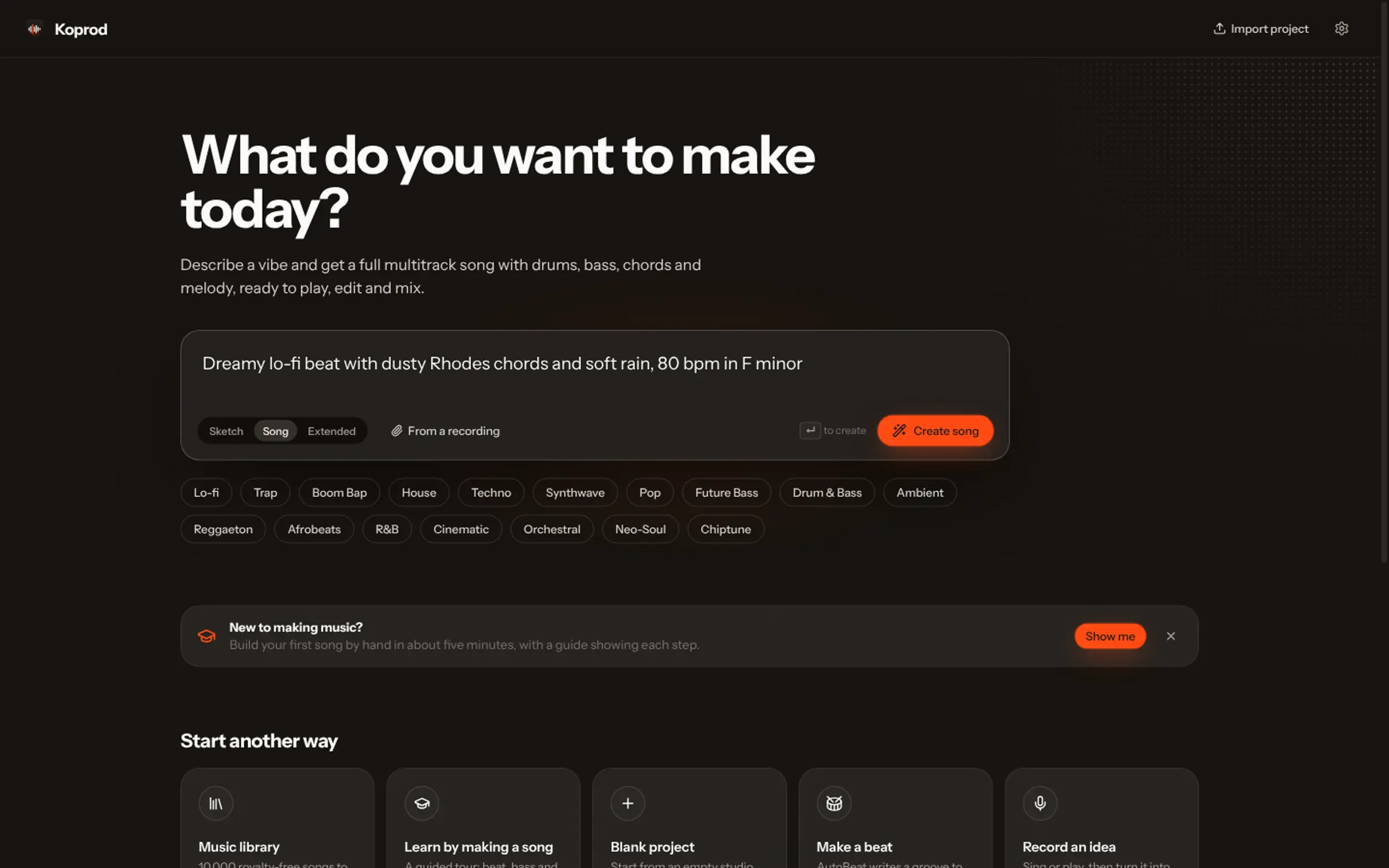
The Vocals music library has 5,000 songs made with Coproducer v2.0, searchable by genre, mood, tempo, length and vocals, every one playable in full. You can use them anywhere, commercially too, with no royalties and no credit. Downloads come with every plan.
Make the music fit the video
A library track has its own length and its own changes, and your edit has cuts. Two ways to close that gap:
- Edit the song. Open a library song in the Vocals studio: it splits into its instruments, so you can shorten a section, drop the drums under a voice-over or end on the last frame.
- Make one for the video. Drop the video into Vocals and it writes a song whose sections change on your cuts: see how to score a video.
If a video gets a claim anyway
Rights systems on video platforms match audio automatically, and they sometimes match music you are allowed to use. If it happens, don’t delete the video: read the claim, find your licence, and dispute it through the platform’s own process with the licence as proof. That is why the receipt and the track’s name matter. To avoid it in the first place, prefer sources whose terms are clear and written down, and avoid re-uploads of tracks of unknown origin.
Podcasts, games and apps
The same rules apply beyond YouTube. A podcast intro needs a short, steady instrumental that sits under a voice: filter the library for instrumental and under 1:30. A game needs loops and moods: calm for menus, tension for boss fights. An app needs a few seconds that don’t get tiring. In each case, check commercial use, and keep your licence.